
By Queen Kunde
The Civil Society Scaling Up Nutrition in Nigeria (CS-SUNN) has called for urgent improvement in funding and stronger commitment by government at all levels as anaemia continues to rise among women and children across the country.
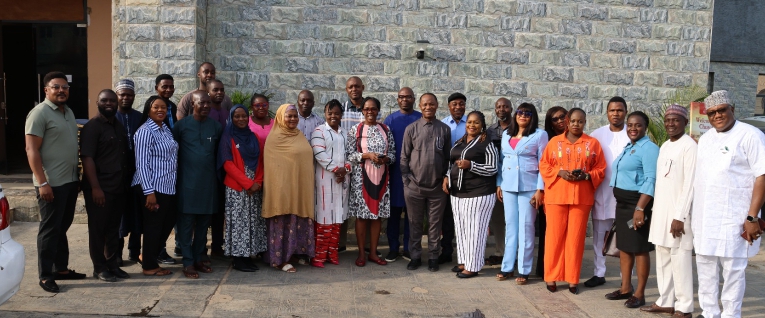
The call was made during a three-day media training workshop organised by CS-SUNN to equip journalists with the skills to raise public awareness on the growing anaemia crisis and draw the attention of policymakers, development partners and other stakeholders to the urgent need to end anaemia in Nigeria.
In his opening remarks, Mr. Sunday Okoronkwo, Executive Secretary of CS-SUNN, described anaemia as a major national public health and development challenge that affects not just women, but the entire population and the country’s future.
He disclosed that about 70 percent of Nigerian children under five and nearly 60 percent of women of reproductive age are anaemic, warning that the condition continues to weaken health outcomes, learning ability and economic productivity.
Okoronkwo explained that anaemia is sustained by an intergenerational cycle of malnutrition, where undernourished girls grow into malnourished women who then give birth to low birthweight children. Without early and sustained nutrition support, he said, the cycle repeats itself.
He added that anaemia occurs when the body lacks enough healthy red blood cells to carry oxygen, leading to tiredness, poor physical growth, weak immunity, learning difficulties and reduced productivity. According to him, the condition contributes 15 to 20 percent of maternal deaths in Nigeria and increases the likelihood of babies being born underweight.
While noting that Nigeria has strong nutrition and health policies, Okoronkwo said weak implementation, poor monitoring and inadequate financing have limited their impact. He stressed the need for better tracking of funds and stronger accountability, especially at state and local government levels.
He highlighted Multiple Micronutrient Supplements (MMS) as a cost-effective, World Health Organization-approved solution for preventing anaemia, particularly among pregnant women as MMS contains 15 essential vitamins and minerals and costs less than ?3,000 per pregnancy, making it affordable and scalable.
Okoronkwo also drew attention to the Child Nutrition Fund (CNF), describing it as a sustainable financing mechanism that supports the supply of high-impact nutrition commodities. He, however, noted uneven adoption across states and urged sub-national governments to take greater ownership.
“it is worrisome that some states have not taken advantage of the Child Nutrition Fund, CNF, which we consider a win-win opportunity where the amount of money provided by a State is equally marched by the already available donor fund, which products needed for such a state owing to its peculiar Nutrition need will be provided” he lamented.
Also speaking at the workshop, Mrs. Helen Achimugu, Assistant Director at the Federal Ministry of Health and Social Welfare, said Nigeria continues to face a high burden of malnutrition and micronutrient deficiencies, especially among women and children in northern parts of the country.
She described micronutrient deficiencies as “hidden hunger” and warned that, although often invisible, they severely affect growth, brain development, immunity and national development. She noted that malnutrition contributes to up to 60 percent of child deaths linked to common illnesses in developing countries.
Achimugu explained that anaemia during pregnancy increases the risk of maternal death, low birthweight, premature delivery and poor child development. She added that Nigeria ranks among countries with the highest number of malnourished children globally.
She outlined government interventions such as food fortification programmes, micronutrient supplementation, national nutrition guidelines and the promotion of Multiple Micronutrient Supplements, which she said are provided free of charge in public health facilities and included in Nigeria’s Essential Medicines List.
In another session, Mr. Geoffrey Njoku, Executive Director of Truvine Communication, urged journalists to report nutrition issues using human-centred and ethical storytelling, stressing that real-life experiences should lead stories, with data used to support them.
He encouraged journalists to explore communities, health facilities and markets for authentic stories, report cultural practices with sensitivity and balance challenges with resilience and solutions.
The workshop which organisers said is aimed at equipping journalist with skills to develop messages that will lead to ending anaemia in Nigeria, added that the menace requires coordinated action, adequate funding, effective implementation and strong media engagement to ensure that policies translate into real improvements in the lives of women and children.