
By Queen Kunde
In a fresh push to tackle conflict from its roots, the Institute for Peace and Conflict Resolution (IPCR) and the Fabulous Minds Women Initiative (FMWI) have signed a Memorandum of Understanding (MoU) to use mental health support as a tool for peacebuilding across Nigeria.
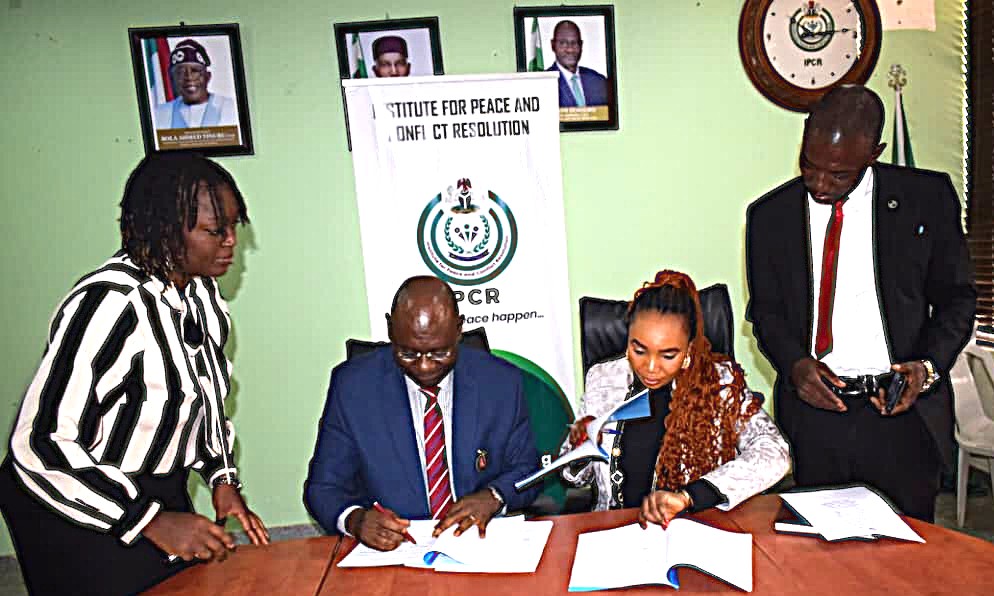
The agreement, signed in Abuja by IPCR Director-General, Dr. Joseph Ochogwu, and FMWI President, Mrs. Betty Agunobi, aims to promote mental wellbeing, trauma care and psychosocial support as key strategies for preventing violence and building peaceful communities.
Dr. Ochogwu said the partnership reflects a growing recognition that conflicts are often driven by untreated stress, trauma and emotional wounds. He described Fabulous Minds Women Initiative as a credible and dependable partner, noting its positive impact in earlier collaborations with the Institute.
According to him, lasting peace cannot be achieved without paying attention to the mental and emotional wellbeing of individuals and communities, especially in areas facing social pressure, insecurity and vulnerability.
Under the MoU, FMWI will take the lead in rolling out community-based mental health programmes, including stress management, trauma care and emotional wellness initiatives. These programmes will focus mainly on women, girls, families and other vulnerable groups.
On its part, IPCR will provide technical support through peacebuilding research, conflict-sensitive programming and policy guidance to ensure mental health is properly integrated into Nigeria’s conflict prevention and peace frameworks.
The partnership will target underserved and conflict-prone communities nationwide, linking mental health care with broader efforts to promote social cohesion, resilience and peaceful coexistence.
The signing ceremony was witnessed by members of the FMWI executive team and trustees, including mental health and communication specialists, as well as senior officials of the organisation.
Observers say the collaboration marks an important step in strengthening ties between government institutions and civil society groups, while addressing the often ignored psychological roots of conflict and insecurity in Nigeria.

