
By Queen Kunde
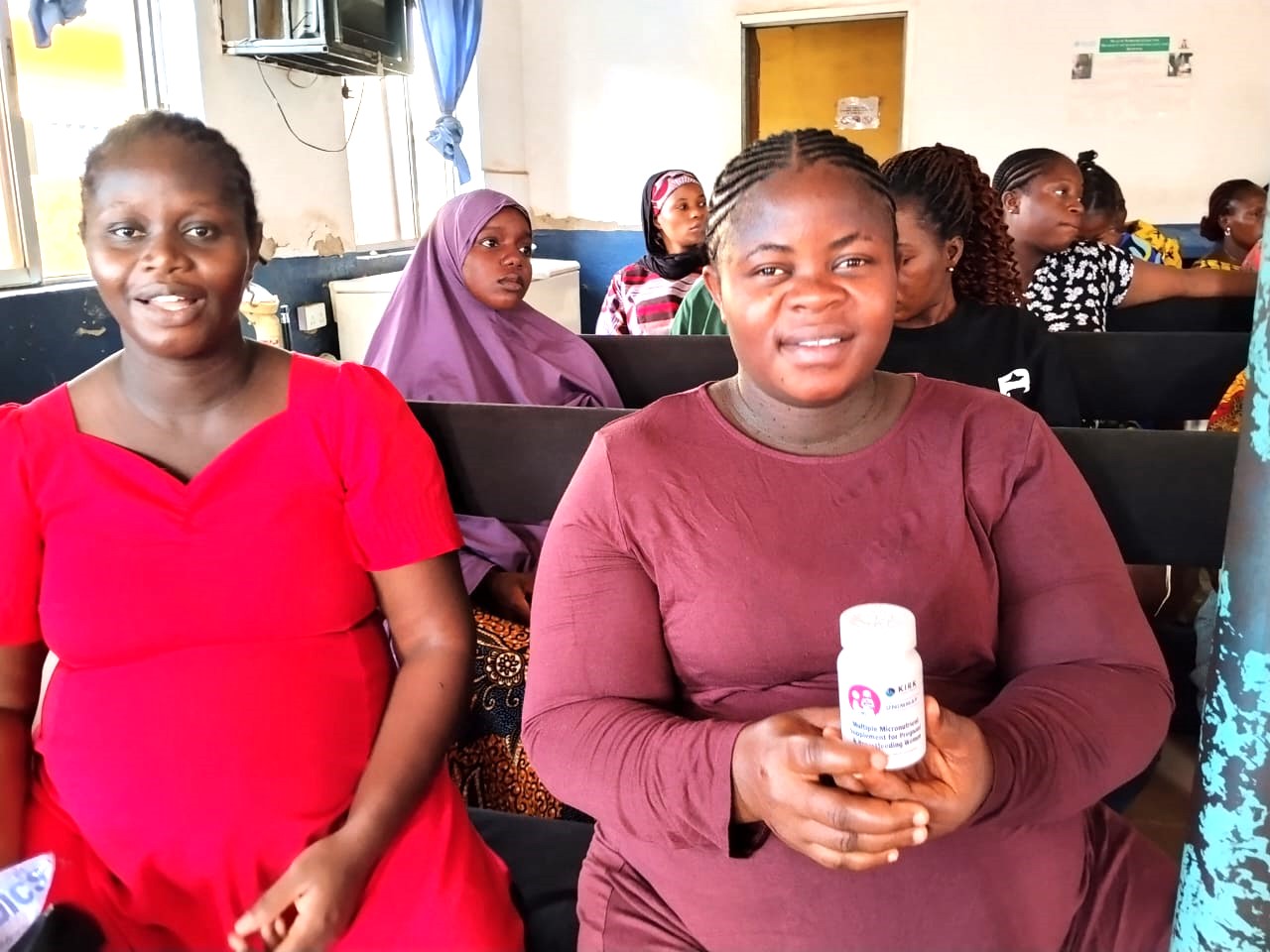
At the Dutse-Alhaji Primary Healthcare Centre in Nigeria’s Federal Capital Territory, a small daily tablet is making a big difference in the lives of pregnant women.
Health workers say the introduction of Multiple Micronutrient Supplements (MMS) has significantly reduced cases of anaemia among expectant mothers attending antenatal care at the facility.
Dr Deborah Joshua, Officer-in-Charge of the centre, said the supplement has simplified pregnancy care by combining essential nutrients into one tablet taken daily.
“With the use of MMS, we have fewer incidents of women coming down with anaemia,” she said during a media visit organised by the Civil Society-Scaling Up Nutrition (CS-SUNN). “Most of our women are doing well, and for the few who were anaemic before starting antenatal care, we restore them before labour.”
Each registered pregnant woman receives a free bottle containing 180 tablets and is expected to take one every day throughout her pregnancy. According to Joshua, the supplement works best when combined with regular antenatal visits, routine blood checks, counselling and close monitoring.
She, however, noted that the facility faces challenges such as inadequate manpower, which can slow down service delivery.
Also speaking, the FCT State Nutrition Officer, Mrs Chinyere Ekwueme, described MMS as a “game-changer” in maternal nutrition. Unlike the older Iron and Folic Acid tablets that contained just two nutrients, MMS contains 15 essential micronutrients needed during pregnancy.
She added that many women prefer MMS because it smells better and does not cause nausea, improving their willingness to take it consistently.
While stressing that MMS improves birth outcomes, Ekwueme cautioned that it does not eliminate all pregnancy complications. She urged women to continue attending antenatal clinics at certified health facilities.
The supplements are provided free of charge, she emphasised, warning that any health worker found selling them would be violating FCT Administration directives. Monitoring systems, including mystery shoppers, have been deployed to ensure compliance.
“These things are meant to be free. If you start selling them, mothers will be discouraged from coming for antenatal, and we will begin to see higher maternal and infant mortality,” she warned.
To sustain supply beyond current donor support, officials are urging the government to key into the Child Nutrition Fund (CNF), a financing mechanism managed by the United Nations Children’s Fund. The CNF operates as a matching fund, doubling government contributions toward nutrition commodities.
Communications and Campaign Manager for CS-SUNN, Mr Peter Olusola, described the CNF as a critical opportunity for Nigeria to tackle malnutrition at scale.
“Every government that pledges any amount for procurement of nutrition commodities, the fund matches it exactly,” he explained, noting that the opportunity will end in 2030.
For many of the women, the impact of MMS is already personal.
Mrs Precious Innocent, pregnant with her third child, said her blood level has improved compared to previous pregnancies.
“During my first child in 2015, they gave us only two drugs. It was not like this. Now, immediately you register, they give you everything. It has helped me,” she said.
Another expectant mother, Mrs Amina Yakubu, said she feels healthier and more energetic in her current pregnancy.
For Hope Akaniyene, who is seven months pregnant with her first child, the difference is clear.
“Each time I take this MMS, my baby begins to kick more. I feel stronger too. They test our blood each visit, and they said it will help during delivery and afterwards. I am happy for it,” she said.
At Dutse-Alhaji, the evidence is growing that one small tablet taken daily can help turn the tide against anaemia giving mothers strength, improving birth outcomes and offering hope for healthier families across the FCT.


Discussion about this post