
By Queen Kunde
The Standards Organisation of Nigeria (SON) has issued a strong warning to food manufacturers to strictly comply with national food fortification standards or face serious consequences.
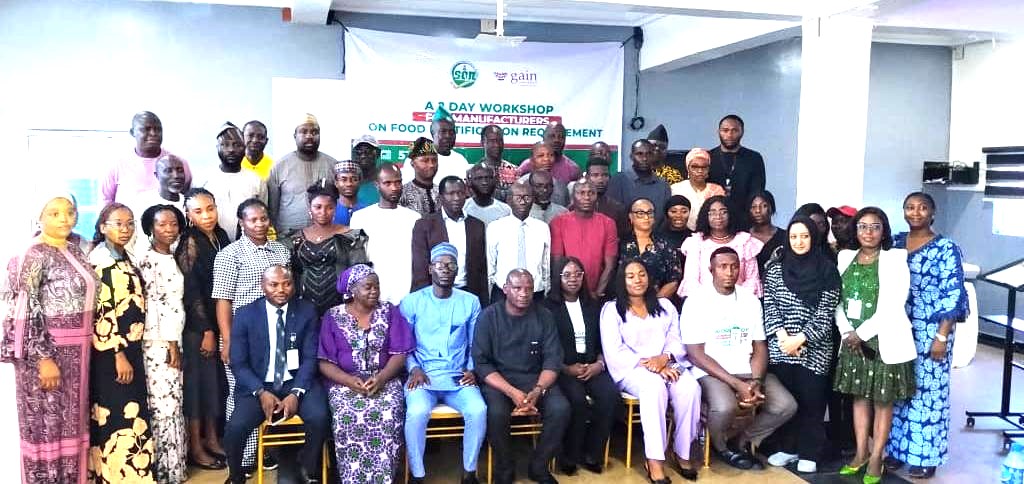
This was the focus of a two-day regional workshop held in Jos from May 5 to 6, 2026, aimed at improving compliance with food fortification requirements and strengthening public health outcomes.
Declaring the workshop open, Plateau State Coordinator of SON, Engr. Kenneth Shawo, said compliance with fortification standards is not optional but an obligation necessary to safeguard public health and maintain consumer confidence.
Experts at the event emphasised that fortification is more than simply adding nutrients to food; it requires accuracy, consistency, proper documentation, and verifiable processes.
Dr. Danladi Walong highlighted that premixes — which contain vitamins such as A, iron, zinc, and folic acid — are highly sensitive and must be handled under controlled conditions to prevent degradation caused by heat, light, moisture, or poor handling.
He explained that improper fortification could result in under-dosing, over-dosing, toxicity, or non-compliance, all of which pose risks to consumers and may attract regulatory sanctions.
In her presentation, Mrs. Eunice Edi, Head of Food and Agriculture at SON Jos office, noted that food fortification in Nigeria has evolved from a voluntary initiative to a mandatory policy covering staple foods such as flour, sugar, vegetable oil, salt, and semolina.
She outlined the responsibilities of manufacturers, including sourcing quality premixes, maintaining good manufacturing practices, ensuring accurate dosing, conducting quality control tests, proper labeling, staff training, and maintaining detailed production records.
SON also emphasised the importance of compliance with laws such as the Companies and Allied Matters Act (CAMA), registration with CAC, and adherence to tax and regulatory obligations involving agencies like FIRS and NAFDAC.
Participants unanimously agreed to comply with government regulations but appealed for intervention to cushion the financial burden associated with fortification processes.
SON reaffirmed its commitment to continuous monitoring, factory inspections, and enforcement, stressing that non-compliance undermines national nutrition goals and will not be tolerated.